Support Us
 Sign Up





























After decades of lingering in adaptation limbo, The Long Walk has finally made it to the screen, and the result is intense, powerful, and emotionally devastating. Based on Stephen King’s 1979 novel, originally published under the pseudonym Richard Bachman, this dystopian horror-thriller brings the bleakness of the page to life with gripping clarity. Director Francis Lawrence, best known for The Hunger Games sequels, proves to be the perfect choice to navigate this grim, emotionally charged terrain.
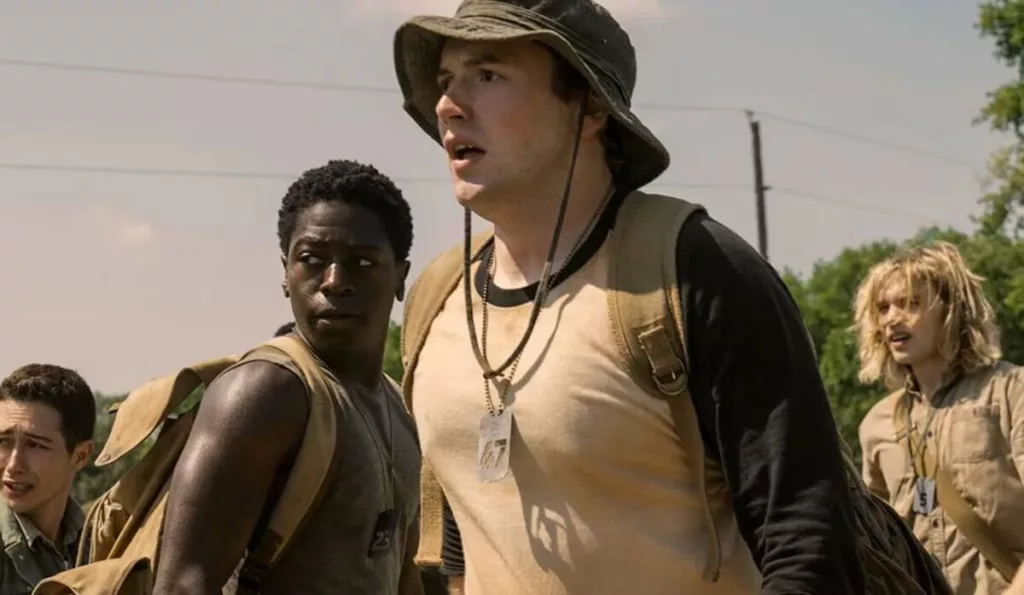
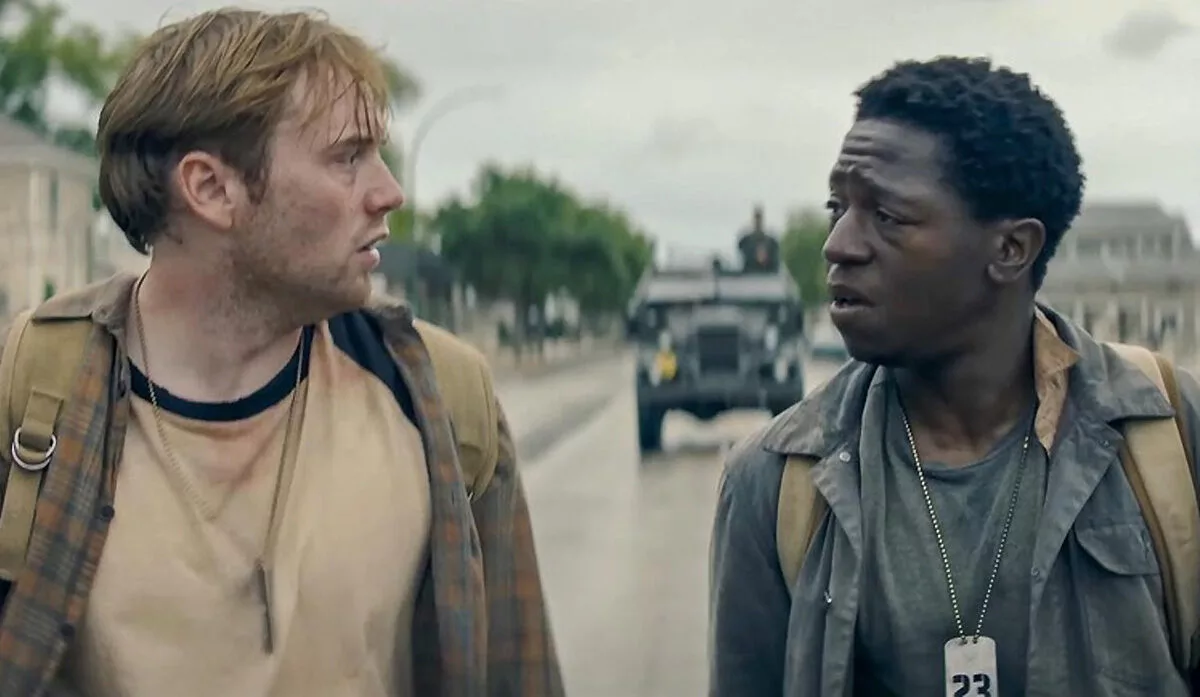
Set in a militarized and economically devastated United States, The Long Walk centers on an annual event where 100 young men, each from a different state, must walk continuously at a pace of at least 3 miles per hour. Any failure to meet this requirement results in a warning. Three warnings and you are executed on the spot. The last boy walking wins a large cash prize and a wish of their choosing. This year’s crop of competitors includes Ray Garraty (Cooper Hoffman), Peter McVries (David Jonsson), Stebbins (Garrett Wareing), Gary Barkovitch (Charlie Plummer), and several others. Overseeing the event is the cold and menacing figure known only as The Major, portrayed with chilling detachment by Mark Hamill.
The story may sound simple on paper, but it carries the weight of a psychological thriller layered with the brutality of a horror film. Turning a narrative based almost entirely on walking into a compelling cinematic experience is no easy feat. Thankfully, Lawrence brings tension, pathos, and a raw sense of realism to the screen. Interesting and poignant conversations, sudden shocks of violence, and quiet moments of reflection break up the monotony of the walk. Every mile walked deepens the character dynamics, forcing us to care about who lives and who dies.
Cooper Hoffman shines in the lead role of Ray Garraty. He brings a grounded presence to the film, capturing Ray’s evolving emotional state as the miles stretch on. Hoffman’s performance is complex and layered. He plays Ray as a mixture of stubborn resilience and buried fear. His transformation is subtle but powerful. As the reality of the Walk sets in, he becomes the emotional center of the film.
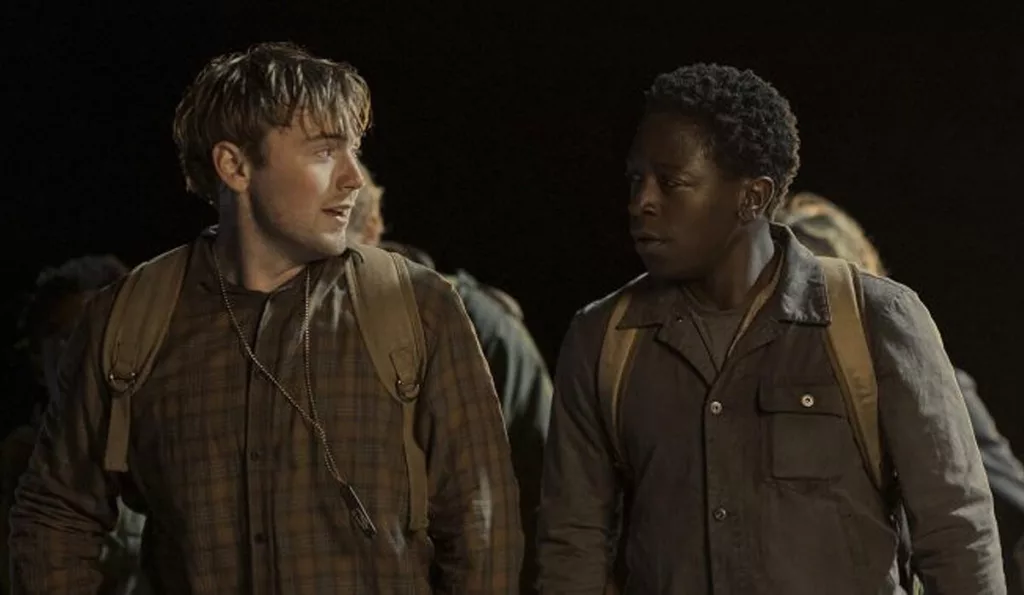
David Jonsson steals the show as Peter McVries. Jonsson will be a star for years to come. His performance is full of warmth and conviction. He provides a vital counterbalance to Ray’s increasingly frayed mental state. McVries is a character who sees the humanity in others, and Jonsson plays him with a sincerity that makes every speech land with emotional resonance. His bond with Ray forms the heart of the film, and their chemistry carries many of the most affecting moments.
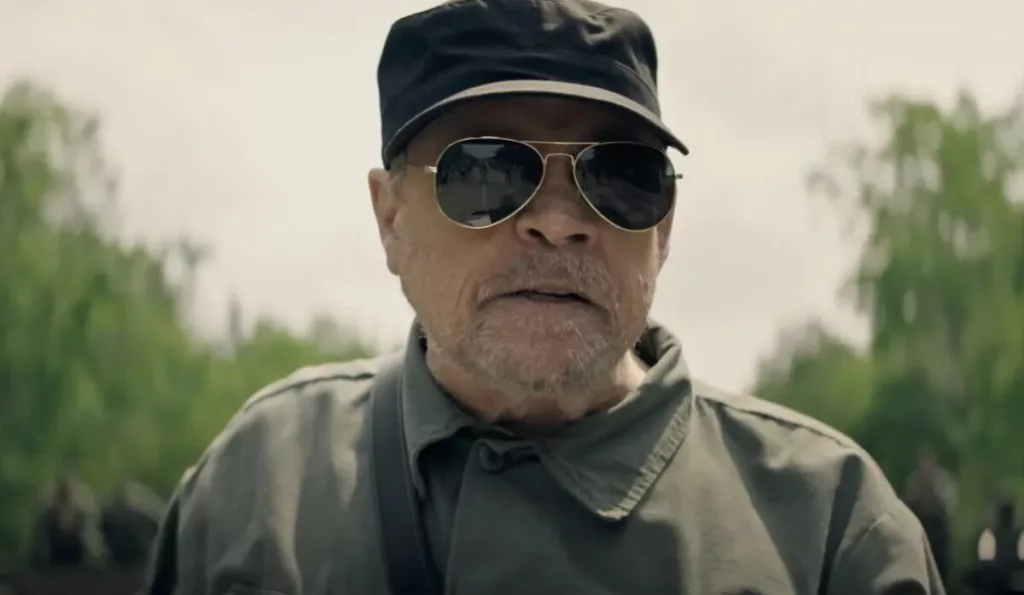
Other standout performances include Ben Wang as the energetic and kind-hearted Hank Olson, and Tut Nyuot as Arthur Baker, whose quiet optimism gives the story added depth. Charlie Plummer, as Gary Barkovitch, delivers a compelling antagonist role. He taunts and threatens, but underneath his bravado lies a palpable sense of fear. Garrett Wareing’s Stebbins adds an eerie sense of mystery. He is intense, calculating, and strangely prophetic. Then there is Mark Hamill, who brings an icy charisma to The Major. His character never raises his voice, yet his presence commands fear. Behind his dark sunglasses, he becomes the faceless embodiment of tyranny.

The deaths in The Long Walk are abrupt and brutal. There is no buildup, no dramatic swell of music, just the deafening crack of gunfire and a lifeless body hitting the pavement. These moments are deeply unsettling, not just because of the violence, but because of how casually that violence is administered. The horror lies not in the bloodshed, but in the system that demands it. By spending time with these boys and letting us see their friendships, dreams, and fears, the film ensures that each death leaves a mark.
Screenwriter JT Mollner definitely deserves praise for crafting a script that stays true to King’s original themes while also making them feel current. The film tackles issues of state violence, personal agency, and the value of human life. It never leans into spectacle for the sake of it. Instead, it focuses on character, dialogue, and the slow emotional unraveling of the walkers.
What makes The Long Walk so effective is its refusal to sensationalize its subject matter. The Long Walk is not just a film about young men dying. It is about what people endure when caught in the grip of inescapable systems. The Walk is a literal death march, but it is also a metaphor for the pressures society puts on young people, forcing them to compete for survival in a world that has already failed them.
The Long Walk is not an easy film to watch. It is emotionally taxing and often deeply upsetting. But it is also a stunning achievement in genre filmmaking. It manages to be horrifying without leaning on supernatural elements, thrilling without constant action, and moving without cheap sentiment. Francis Lawrence has taken one of King’s darkest works and created something that is both timely and timeless.
Grade: B+
Follow us on MSN for more content like this.

The Long Walk
Every year, fifty teenage boys meet for an event known throughout the country as "The Long Walk." Among this year's chosen crop is "Maine's Own," Ray Garraty. He knows the rules: that warnings are issued if you fall under speed, stumble, sit down. That after three warnings – you get your ticket. And what happens then serves as a chilling reminder that there can be only one winner in the Walk. The one that survives.
Release Date: September 12, 2025
Director: Francis Lawrence
Cast: Cooper Hoffman , David Jonsson , Garrett Wareing