Support Us
 Sign Up








































‘Amazing grace, how sweet the sound, that saved a wretch, like me.’ We all know the melody, and without the lyrics the hymn can be used in so many more ways. As the vast Norwegian landscape unveils itself to us, ‘Amazing Grace’ hums through our ears. As the ferry pulls into shore, the landscape changes from the huge lake we see to the even taller mountains ahead. All is large until a girl hugs her father and apologizes to him before heading to school, then we see a small neighbourhood in the tiniest district. So small, they all take a van to school.
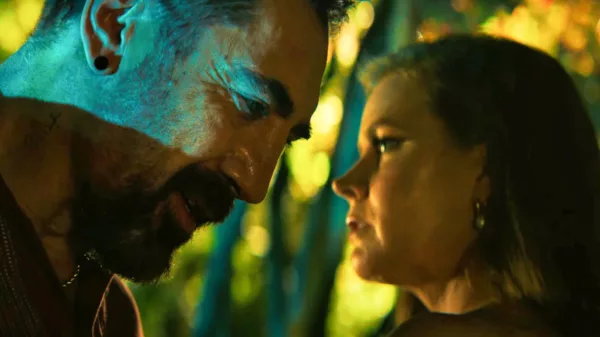
Mihai Gheorghius (Sebastian Stan) and his wife Lisbet (Renate Reinsve) move from Romania back to her birthplace of Norway. With their five children they settle down in a small village and quickly bond with their neighbours, the Halbergs. We immediately learn just how minute their community is even despite having different upbringings, their proximity and constant hang outs bring the children to become close friends. As Mihai looks for work, among his current IT role, Lisbet assists an old age home and the Halbergs’ dad as well.
Stan and Reinsve Unsettle in Mungiu’s Fjord, a Cannes Drama That Asks More Than It Answers

Coming from a foreigner’s perspective, I find all Norwegian films to have a certain quality to them. The grain of the film and the static of the camera, all works quite well in the dark and mysterious world of Fjord. Not once do they reference the valley between the high cliffs they live in, but we are all aware of just where on the coast in Norway they are situated. A world unlike any other, for both the audience from afar, and the Gheorghiuses as well. In Christian Mungiu’s creation of another intense, and perhaps totally insane family drama, he fittingly chose to set it amidst the unknown and the almost void like quality of its space.
Unaware of what it wants to be entirely, Fjord studies the ideas of religion and parental capabilities. How we choose to raise our own children based on prior family experiences and the ideas from outsiders looking in. As neighbours become more involved in each other’s lives, they begin to see more into the inner workings of each of their families.

Mungiu has taken a spin, in my opinion on the typical religious tropes. I feel as though we are used to seeing the religions of the world oppressing those who do not follow their beliefs. Whereas in Fjord, this Norwegian village is supposedly filled with progressiveness. They are fine with their children being themselves, on the internet, and freely spending time out of the house. Yet when this highly Christian orthodox family moves into town, and one thing seems off, they decide to take things into their own hands.
Admittedly, we are brought directly into this idea that the Gheorghiuses do not punish their children in the most usual or common way. From the first apologetic moment between Mihai and the eldest daughter, bruises on the children’s necks on their way to school, and their ban of technology and queerness, the village becomes suspicious. It begs the question whether or not you are truly progressive if you oppose those with religious and older beliefs.
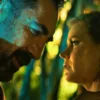
Away from the tricky content, is the portrayal of this difficult to read family. Stan and Reinsve are peculiar and perfect choices for the role. While Stan being American, he did discuss the fact that the role brought him back to his Romanian roots. Give him a bald head and a creepy accent, and you will be suspicious of him at any day. Changing from fatherly to a bit too over the top aggressive, we never see him lay a hand on his children. Reinsve as Lisbet is a calmer mother figure for the children. With her glasses and outfits, she feels just as hidden within the family. Perhaps purposefully done to continue the religious idea, and the belief that the men run the family. But all in all, the two seem tender with their children physically, which makes us question as the audience whether or not they have ever done what has been suspected of them.

All seems to be enjoyable until the legality of these accusations comes up. It might be more recognizable for a native, but as a foreigner or simply in the context of Fjord, the pace begins to slow. The interest is there while wondering just exactly what Mihai and Lisbet have supposedly done to their children, but once the village and Child Protection begin to take action, the action itself falls flat. I truly wish there would have been more of a need or event to make the neighbours worry. Instead it was simply that they disapproved of the Gheorghius’ religious beliefs. Fjord feels like it just nit picks on the insignificant while not going fully there.
It is a huge world out there, and the fjords in Norway can make people feel small which adds to just how secluded they are in Fjord. But outsiders come, outsiders who are not progressive as so desired. Progression, religion, everything is questioned in Mungiu’s In Competition film at the Cannes Film Festival. A film that has a lot to unpack, and elements that needed work. Stan and Reinsve perform miracles of sort, making you question whether or not they did it. Fjord for sure found its audience in Cannes, and will most likely continue to do so as it expands around the world. Unfortunately for myself, it was missing some lustre that I had previously hoped for.
Grade: C+
Follow us on MSN for more content like this.

Fjord
The Gheorghius – Catholic and Romanian – settle in a Norwegian village, the mother’s birthplace. They quickly bond with the Halbergs, who live in the neighbouring house near the bay. Despite their very different upbringings, the children of both families soon become close friends. Until the Gheorghius are suspected of hurting their own children
Release Date: May 18, 2026
Director: Cristian Mungiu
Cast: Sebastian Stan , Renate Reinsve , Lisa Carlehed