Support Us
 Sign Up





























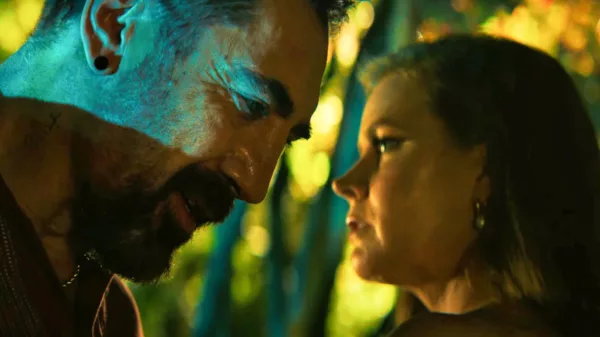







Oliver Hermanus takes two of the most romantic leading men in modern cinema and directs them in the most sexless and unsentimental way possible. A film has so much potential, but only shallowly explores the importance of true love and the power of sound. Luckily, a last minute gut-punch makes the subtlety of the opening two hours almost worth your time.
The History of Sound, written by Ben Shattuck from his own short story follows two men during World War I and its aftermath who connect over their love of music. The gay romance strangely lacks the romance, as the film relies entirely on the natural chemistry between Paul Mescal and Josh O’Connor.

Kentucky farm boy Lionel (Mescal) and middle-class academic David (O’Connor) are two Boston Conservatory music students who meet in 1917 over a piano in the pub. The duo bonds over the folk song David sings, and they soon start a relationship. Considering the romance is central to the plot of The History of Sound, their relationship is implied and never shown. The camera cuts away before any sparks can fly, feeling like a page missing in a novel.
One minute, they are singing over a piano, and the next, Lionel wakes up alone in David’s bed. There is no need to go into R-rated love scenes, but the lack of intimacy makes it tricky to find their romance believable. Luckily, Mescal and O’Connor could have chemistry with a cereal box and easily fill in the gaps missed by the edit.
After WWI approaches, David is shipped away to war, and Lionel returns to the Kentucky farm to care for his parents. When David returns, unwilling to talk about his experiences in the trenches, he invites Lionel on a journey through the backwoods of Maine, collecting traditional American music. The middle act focuses more on the music than on Lionel and David’s relationship, which may wear thin on those not keen on folk music.
The film continues to be coy about Lionel and David’s relationship as they travel through the beautiful northeastern scenery. Scenes show them cuddling in their tent, but their actions towards each other are too muted to root for their love. Every now and then, Lionel will coyly smile at David, and they talk about how much of a lovely time they are having. It’s hardly an on-screen love affair to swoon over.

When life forces them apart, this lack of swooning makes it hard to be too concerned with their separation. Things seem to happen to the characters, rather than play out on screen, as if someone were half-explaining the facts of a story. The second half of The History of Sound follows Lionel aimlessly through the next decade of his life. The film stops in Italy for an indulgent but aesthetically pleasing flash into post-David life for Lionel before heading to Oxford. Neither scene pushes the plot forward nor tells us anything new about Lionel or David.
Baffling, the real romance shown in The History of Sound is between Lionel and Clarrisa (Emma Canning). In a film about queer love, the only nudity or on-screen sex scene that shows below the waist is between a man and a woman. Oliver Hermanus (who himself is gay) might want to portray the repressed attitude towards gay love in the era, but it comes across a little offensive to minimise homosexuality in a movie where it plays such a central theme.
The History of Sound suffers greatly from poor pacing. It plods through songs and locations, failing to understand that Mescal and O’Connor’s on-screen chemistry is the real MVP of the film. The film predominantly concentrates on Lionel’s life, pushing David’s character arc aside. It’s frankly an underuse of O’Connor, who outcharms the talented Mescal in their early scenes together. As the film sees the world through Lionel’s POV, it’s no surprise that David shines in every scene he’s in.
As slow and plodding as the first two acts are, the final half-hour of the story is a gut-punch to the stomach. In a now trademark of Mescal’s work, the story takes a heartbreaking turn that feels unexpected even if unearned. Mescal’s work in the latter scenes, including another unnecessary quest to the Lake District in the UK, is hugely affecting and almost makes the slow 90 minutes worth it.
An epilogue with Chris Cooper playing an older Lionel gives the film an emotional payoff that it doesn’t deserve. Thanks to Mescal and Cooper’s subtle performances, the film delivers a finale that may have been even more impactful had the film explored David and Lionel’s connection any deeper than the surface level. Hermanus understands how to use the power of manipulation and a sad Mescal to make audiences care about a character, it’s just two hours too late.

Cinematographer Alexander Dynan gorgeously captures the world of The History of Sound. The European chapters are bright and sumptuous, contrasting the muted palette used to portray early 20th-century America. The film often indulges in admiring the landscape and lingers on nature, testing the audience’s patience.
The History of Sound relies on the central performances from Mescal and O’Connor, and the duo does boost the material. The pair also sing, with composer Oliver Coates (who also worked on Aftersun’s haunting soundtrack) providing original folk music for the score. The two are talented vocalist, Mescal especially, with a Kentucky accent masking the Irish twang, even if some of the musical moments outstay their welcome and become repetitive.
Hermanus isn’t interested in rehashing the age-old story of forbidden love and private affairs. That has been told enough in film, but what he wants to say instead is not quite clear. The intention of portraying the ambiguous, repressive nature of the era ultimately comes across like an underbaked romance, which fails to understand how to write an effective character arc. Luckily, excellent performances and a moving ending make The History of Sound worth your time.
Grade: B-
Follow us on MSN for more content like this.

The History of Sound
In 1917, two young music students attending the Boston Conservatory bond over their mutual love of folk music. They reconnect a few years later, embarking on a song collecting trip in the backwaters of Maine.