Support Us
 Sign Up














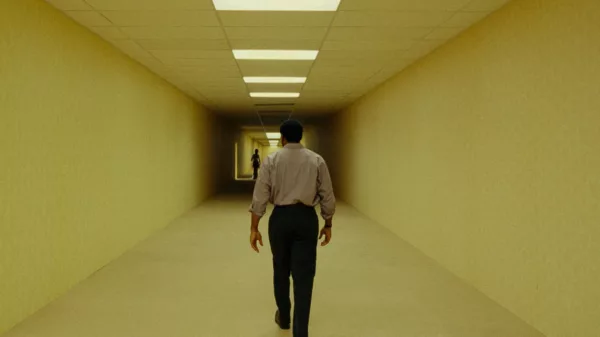
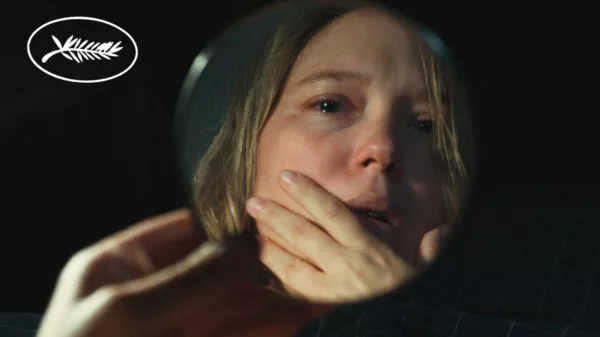





After spending more than a decade as a YouTube film critic, first-time director, producer, and writer Chris Stuckmann is finally making his feature filmmaking debut with the Mike Flanagan and NEON-backed Shelby Oaks. Though the film is admirable in its intentions to offer a new, original story in a sea of IP and remakes, Shelby Oaks feels regrettably familiar, leaning on vague tropes to cobble together an infernal mystery that’s simultaneously underbaked and overwrought.
Shelby Oaks: Found-footage starts and a jarring final act collide with thin character work, dulling the scares
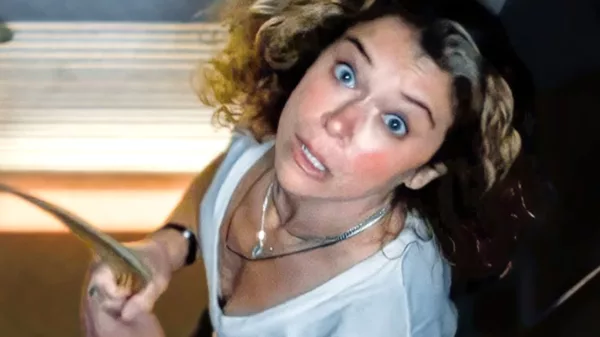
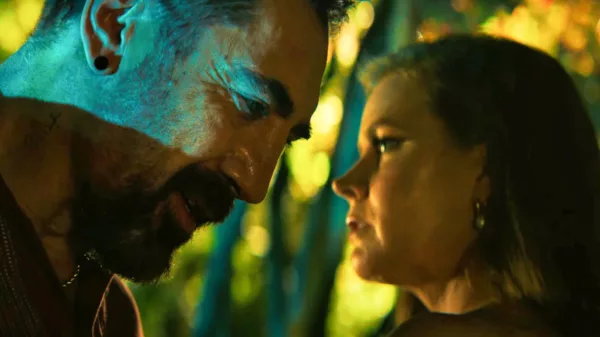
Starring Camille Sullivan, Brendan Sexton III, Michael Beach, Sarah Durn, Robin Bartlett, and Charlie Talbert, Shelby Oaks follows Mia Brennan (Sullivan), whose sister Riley disappeared alongside her fellow hosts of “Paranormal Paranoids,” a ghost-hunting web series. Though three of the four hosts (Eric Francis Melaragni, Anthony Baldasare, Caisey Cole) have been found dead, Riley remains missing, and a documentary crew arrives to chronicle Mia’s pursuit of the truth.
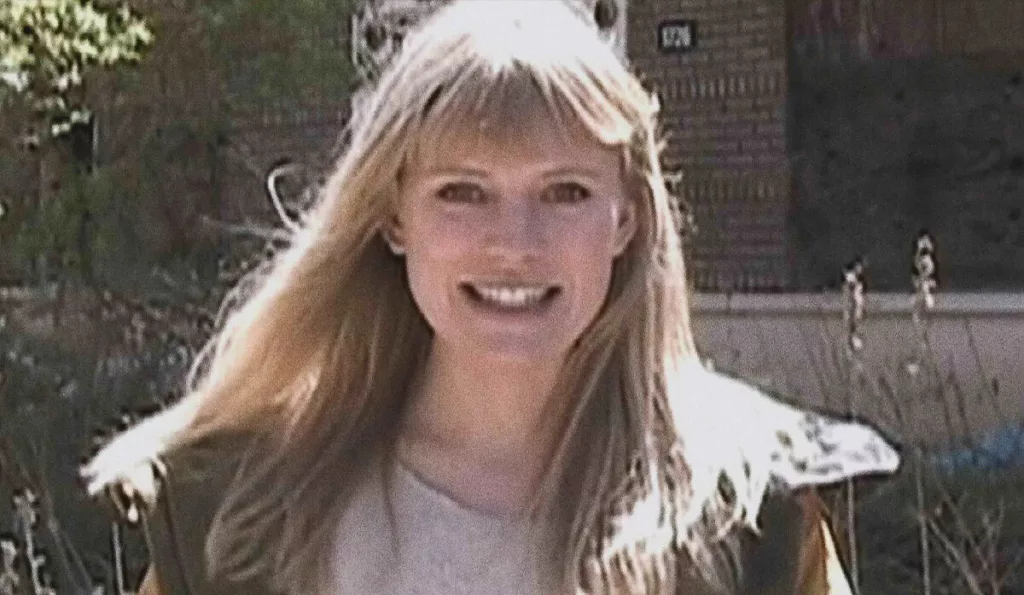
The first 20 minutes of Shelby Oaks are a tried-and-true found footage film, akin to The Blair Witch Project (albeit with a distinctly modern, Netflix docuseries-esque look), only for the film to abandon the framing device almost entirely in favor of a jump scare to accompany the opening credits sequence. By the time the docuseries is picked up again (in the film’s final moments), it’s as a tangential afterthought, haphazardly following up with the documentary film crew who have been conspicuously absent for the majority of Mia’s investigation.
The length of the cold open (though 20 minutes is hardly a marathon) feels particularly egregious with respect to how little development there is for the personalities of or relationships between the ‘Paranormal Paranoids,’ Riley’s fallen internet ghost hunters in arms. David, Peter, and Laura have no discernible personalities beyond their ability to pad the kill count of the as-yet-unidentified spectre haunting the town of Shelby Oaks, nor does the film lay the groundwork for clever viewers to clue themselves into Riley’s whereabouts.
Instead, the mystery at the heart of Shelby Oaks swerves suddenly across horror subgenres in the last act, taking a jarring, sexually violent turn utterly discordant with the scares in the first half of the film. It isn’t just Riley’s fellow Paranormal Paranoids who are underserved by Stuckmann’s script — though Keith David harnesses his charisma to transcend the otherwise tepid script, the same can’t be said for Sexton III, whose character Robert completely disappears into the already greyscale world of the Shelby Oaks ensemble.
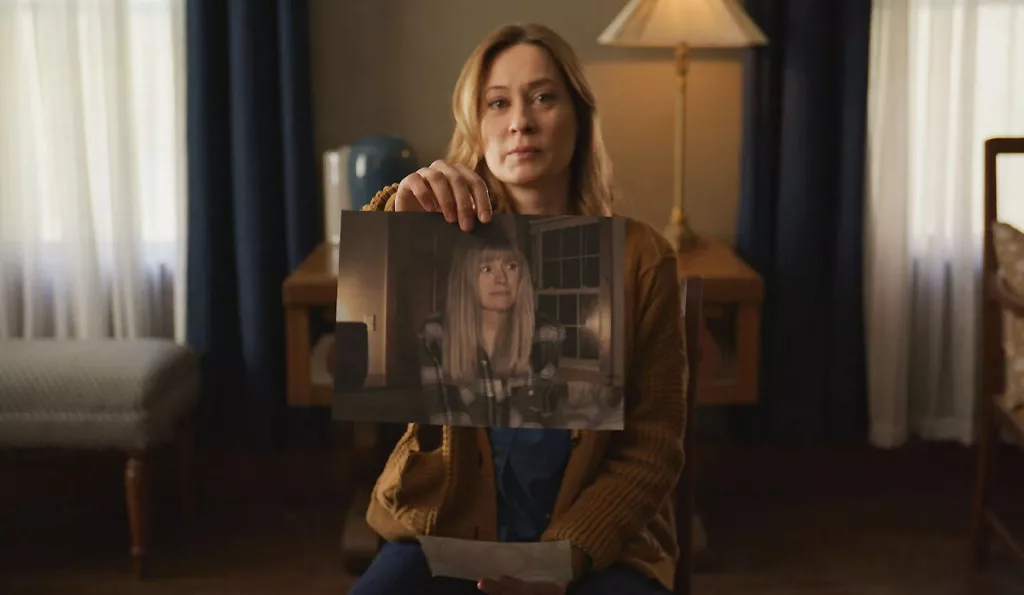
Then, there’s the issue of Mia’s characterization (or lack thereof), beyond being a devoted, worried sister, Sullivan’s heroine is achingly lacking in charisma, motivation, or any other memorable traits that might make her a worthy addition to the legendary canon of horror leading ladies. But while Sullivan commits herself to an emotional performance that often anchors the film’s strongest moments, there’s still a fatal lack of time spent developing the relationship between Riley and Mia.
Without any idea of the nature of Riley and Mia’s relationship beyond “sisters’ (and, perhaps even more devastatingly, no sense of Riley’s personality besides her affinity for the paranormal), Shelby Oaks offers no insights into the sisters’ bond beyond a single recurring motif that also serves as a visual MacGuffin for the mystery plot.
As for the mystery at the heart of Shelby Oaks, despite the film (mercifully) clocking in at just around an hour and a half long, there’s no sustained sense of urgency or tension driving Mia’s search for her sister forward, nor are there memorable supporting players to add color to Stuckmann’s decrepit Ohio town. Instead, Mia drifts aimlessly and alone from one plot point to another with a perpetually half-worried, half-frightened expression and an instinctual certainty that her sister is still alive.
But when Shelby Oaks finally arrives at its conclusion, it’s not with a bang, but a whimper: bait-and-switching the audience with a limp twists that reframes Mia’s story while simultaneously making an already unsatisfying resolution to Riley’s kidnapping all the more frustrating and ill-conceived.

Certainly, Shelby Oaks is a film created by someone with a reverence and passion for horror as a genre, but the film’s eagerness to tackle and incorporate what often feels like as many modern horror tropes as possible leads to a watered-down final product that’s never truly effective in any of its many simultaneous subgenre pursuits.
While there are a few elements of Shelby Oaks that are undeniably memorable (Robin Bartlett gives a standout performance as Shelby Oaks resident Norma), these crucial injections of personality are far and few between, and the result is a serviceable but entirely unmemorable freshman effort from Stuckmann.
Though Shelby Oaks boasts backing from horror maestro Mike Flanagan (who serves as executive producer), and sets out with admirable intentions to create a new, original, atmospheric nightmare for audiences, the film’s pervasive lack of personality and inability to commit to a single subgenre result in a muddled, often frustrating (though undeniably unsettling) debut feature from Chris Stuckmann.
Grade: C-
Follow us on MSN for more content like this.

Shelby Oaks
A woman’s obsessive search for her missing sister leads her into a terrifying mystery at the hands of an unknown evil.
Release Date: October 24, 2025
Director: Chris Stuckmann
Cast: Camille Sullivan , Brendan Sexton III , Michael Beach