Support Us
 Sign Up


















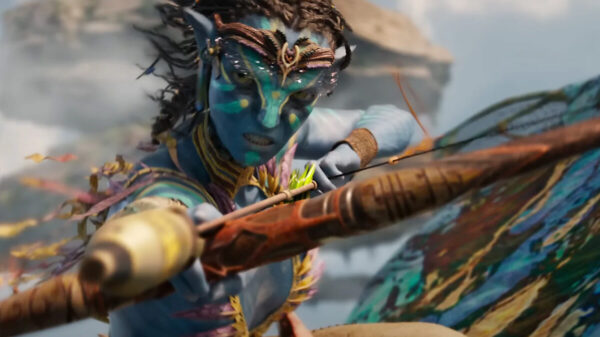
The biggest challenge for the below-the-line artists who worked on Avatar: Fire and Ash was bringing the Ash tribe (the Mangkwan Clan) and Windtraders (Tlalim clan) to life, who drive much of the conflict as Jake Sully’s (Sam Worthington) family find themselves in a new battle for their homeland.
The two production designers, Dylan Cole and Ben Procter (who were Oscar nominated for The Way of Water) started out as illustrators on the first Avatar (2009) when the workflow was more cleanly divided between the virtual and live-action elements. Producer Jon Landau, who has also been involved with Avatar from the jump, asked them both to come back as department heads for the sequels, and Cole and Procter have a proven method of dividing the work. Cole works with the Na’vi’s natural environments and the world of Pandora, while Procter deals with the high tech human elements.

“Anytime we can introduce a new clan, it’s very exciting,” Cole says of working on the various locations for the Ash tribe. “We had the benefit of working on multiple sequels at once, so we were developing three new plans. That was a massive benefit, but the Ash themselves were such an absolute blast because they’re the anti-Na’vi, right? They go against all the rules.”
Below, Cole and Procter break down their creative process for Avatar: Fire and Ash, why they created a working manual for the Windtraders, and how the evolution of director James Cameron’s technology has evolved in the 16 years since audiences were first introduced to Pandora. This conversation has been edited and condensed.
Matt Minton: With the Ash people and their backstory, what were the important considerations when designing their home and surrounding environments?
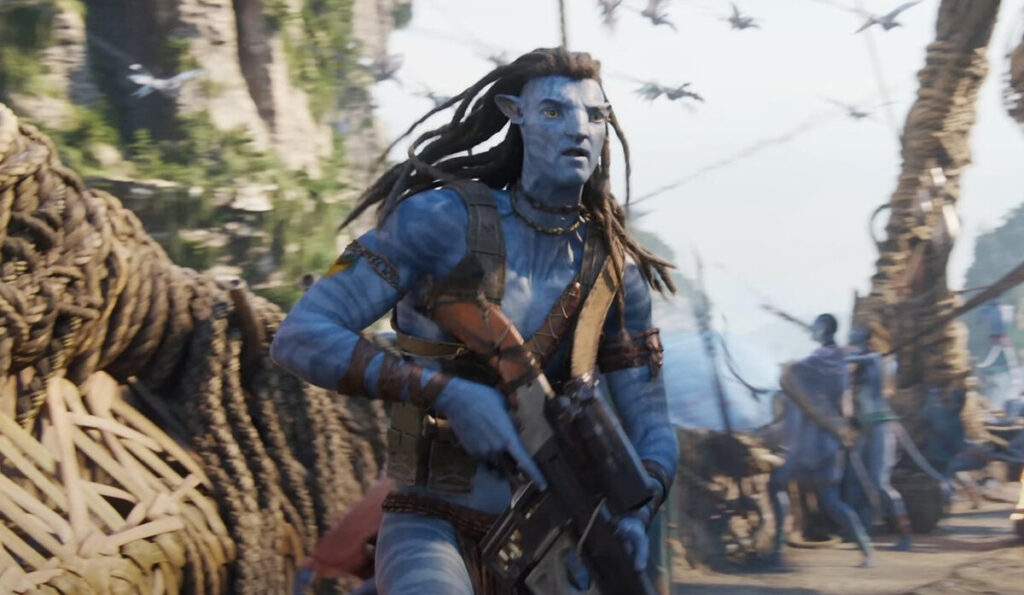
Dylan Cole: They have forsaken laws and freely use metal, just destroying and killing anything they want. They are raiders and homeless because they were taken out by a volcano. That was, of course, a big story point that we wanted to embrace visually. Jim, as he conceived it, was inspired from a trip he took to Papua New Guinea and saw the ash and people just living. What he saw had a positive impact, so of course he imagined the negative aspect. It was so great because it was so opposite the forest, opposite the oceans. It’s a desolate ash wasteland of charred Earth and volcanic ground. So of course, we looked at that reference, but thematically, it’s [all about] trying to reinforce themes.
We came up with the idea of showing a burnt out grape tree, like a home tree from the first Avatar. We thought of the Ash people as much more relatable if we think about them as living like the Omatikaya Clan. We incorporated that into the design as a storytelling element and as a visual icon of where they are and their history. Everyone’s kind of a hero of their own story so in their minds, they are survivors, resilient and tough. They will not be conquered by anything. With the way they were written, it was easy to think of them as primitive cave men but they’re still Na’vi. They’re very intelligent master craftsmen like all Na’vi are, which makes them scarier. So we incorporated a lot of the Na’vi visual language but swapped out the materials and gave them a darker aesthetic. They’re bending charred pieces of wood and stretching animal hides and using bones.
Matt Minton: What were some of the biggest challenges with the human and more machine elements, and how they culminate in the climatic final set pieces when all these storylines clash?
Ben Procter: In The Way of Water, the Resources Development Administration (RDA) had decided in the face of defeat in the Hallelujah mountains that they needed to double down. For this third movie, I had to figure out a triple down to visually convey that the RDA never gives up. What does it mean for the visual DNA of the RDA to continue expanding and get even more cancerous and menacing?
The big opportunities I had for that were the human base, which we saw as a kind of construction site just coming into existence in the second film. Here we see it in its full glory. The idea is to visually convey that this is a pollution spewing cancer upon the sacred land of Pandora. We did everything to make them feel nasty and dirty and all those kinds of things. We see the newscast and them using propaganda to position Jake Sully and what he represents toward RDA personnel in a certain way. There’s all these cultures of the Na’vi side which are amazing, but I also have to think of the RDA as my opportunity to create a culture. I call the general design motif “high performance cruelty.” My question is how can I make designs that are scary to the audience that live up to being called demon ships by the Na’vi that also have a sort of excitement and fun about them that reflects how the RDA people feel about their mission? They think they’re saving humanity, and they’re having a great time.
This time around, we have a giant new 900-foot factory ship. Instead of having a bunch of little Picador and Matador boats as its wolf pack to go hunt, now we have sea dragons. Something like 72 vehicles launch off the factory ship, so it’s a monstrosity on the sea. It’s almost like I’ve taken a piece of the city and just moved it out.
Matt Minton: You’ve both worked on these films from the very beginning and have worked with many of the same collaborators over the years, including costume designer Deborah L Scott, if you want to speak to how important collaboration has been with the other departments.
Dylan Cole: Deb had the same philosophy with the Ash costumes as I had with the architecture, which is that they can only pull from their environment. From the early days, we knew that Varang (played by Oona Chaplin) had the red headdress. So while red is one of the main colors of the Ash, I intentionally didn’t overuse it so that Varang would pop. Inside her yurt, there’s minimal red so that she’s the star. Down the line we work with our virtual art department to make sure everything is translated through and everyone’s common vision is realized. Collaboration is endless because we’ve worked on it for so long, it really is this family. Sometimes dysfunctional family, but a close family nonetheless.
Ben Procter: In the specifics of working with Deb in costumes, you can see a strong overall graphic correlation between the types of colors and markings that we do on the vehicles. And then the pilots that are in those vehicles. And on the oceans, it’s the same thing as in the air. When we put bright, high-vis colors onto cranes and all kinds of equipment on these ships, we needed to make sure the characters would stand out as well. All the safety equipment that the sailors wear was carefully conceived to be very relatable and real world. When you see it, it feels like it has one foot in today but then a distinctly noticeable step into tomorrow and a futuristic look that, again, conveys that the RDA is always investing more money and doubling down.

As for the overall collaboration, I mean, look at the credits of the film. Look at all the human beings involved in making this. The miracle of it all is this act of collective imagining that gets everybody through literally years of the process, conceiving of designs, scouting. performance capture and live action. It’s this iterative, complex process. So much of the imagery on screen is realized in the visual effects process. Lucky for us, we have the incredible privilege as production designers to be kept on through the whole thing so that we are right there in the trenches with the VFX teams, trying to convey what we want out of these designs. It’s a weird-techno cinematic miracle that we’re able to do this. And literally only Jim on the planet is able to think up the idea to do it and have the stamina and the intellect to actually go through all those ugly duckling phases, knowing full well exactly where he’s steering the ship.
Dylan Cole: I want to add two other important collaborations that are very unusual for us as production designers. One was with the writers. When Ben and I started in the early days, there were no scripts and some outlines. Jim was basically running a writers’ room like television directly below us, and so they’d pop up, look at stuff. He’d come down, rip something off the wall and say, “Hey, I need to see this idea.” Our art was directly feeding and vetting their ideas for the stories. The other collaboration that was really exciting for me was working with the composer, Simon Franglen, who’s just done incredible work. You know, we never have anything to do with the composer [in films] but we were talking about Na’vi instruments and have several scenes where there’s on-camera music. A prime example is a brief scene on the Windtrader gondola when they’re dancing, having a party at night. That used to be more extended and we created instruments for the Ash and their drums. And with the Metkayina Clan, there’s a big underwater drum where they’re inside a giant shell suspended underwater. So that was an amazing collaboration to be part of, and then we had an amazing full circle moment in being invited to the scoring sessions and getting to hear that live.
Ben Procter: Totally, I mean the hair went up on the back of my neck the first time we actually sat in the recording stage — after almost having blown a tape by walking in the wrong door of that exact room, by the way.
Matt Minton: Talking about the evolution of technology across these three films, what James Cameron has done with the Avatar films is unlike anything else in the industry. I’m curious how that evolution has affected your work because so much of this film features visual effects but you still really feel these practical elements with the costumes and production design that bring it to life on another level.
Ben Procter: The process has changed a little bit. The virtual production render that we use can handle a lot more polygons and light. What we do in real time sort of parallels the development of game engines to an extent, where the graphics just keep getting better. That puts more of an onus on us to define the final look of the shots earlier. It was just painfully obvious on the first Avatar that the templates were a sketch — an intention but visually limited. Now, they look good enough that, like it or not, they’re going to be taken as a very specific visual direction by the visual effects partners. And to some extent, for fear of changing it because so much work’s been invested in it. So that means we have to get our vision into that virtual process but it’s also an amazing and fun opportunity to work with our visual art department people and the sequence teams to really cook these worlds together. The way the movie turns out is entirely dependent on technology, but it’s more so dependent on a kind of creative process, right? The idea that we are basically shooting a live action movie by other means.

Matt Minton: In our last few minutes together, is there anything else you both want to touch on from your work in the film?
Dylan Cole: The Windtraders were the first thing I heard about in my meeting with Jon Landau about 12 years ago to talk about the sequels. He read me a brief passage of Jim’s notes from his 1500 pages that he wrote just about this exotic caravan in the sky. It was this romantic image that could easily be very fantasy, and it was our difficult and fun job to ground these fantasy ideas in reality. We always say we look at things with a National Geographic lens. And so, “OK, how would this [actually] work?” There’s this giant jellyfish blimp, it has this internal gas mechanism in its gut processing bacteria that releases these gasses and has the ability to control that. So we had to design this basic flying jellyfish that’s hundreds of feet tall from the ground up. That system with the gondola, the Medusoid and Windray was my biggest design challenge on Fire and Ash.
The gondola itself was complicated enough: it’s not just a vehicle, it’s their home. There are trinkets of their past travels woven into the braids of shells and beads and you see the cargo from where they’ve gone. It’s a cultural statement of who they are and where they’ve been. So with any storytelling opportunity, we tried to latch onto and inject realism. Our amazing set decorator, Vanessa Cole, and her team wove over 3000 feet of custom braided rope for the Windtraders for the live action. So we built chunks of that set. The main deck of that entire gondola fit onto our stage, and it had below decks and partial decks with some of these big beams going up and ropes to do all the fun Errol Flynn swinging stuff. Even down to the granularity of Jim wanting us to collapse those veins, which are like the big wing sails of the Medusoid. Any other director would’ve had some background people just go yanking on ropes randomly — nope. He wanted to know how it worked. Thankfully, we had done our homework and had designed this rigging to make sense. It was to the point where we made a manual of how you fly this thing and brought it down to stage so we could tell every performer what rope and line they’re supposed to be pulling on or letting out at any given moment. It could have been faked, right? No one would know. But that’s our type of thinking.
Follow us on MSN for more content like this.