Support Us
 Sign Up





















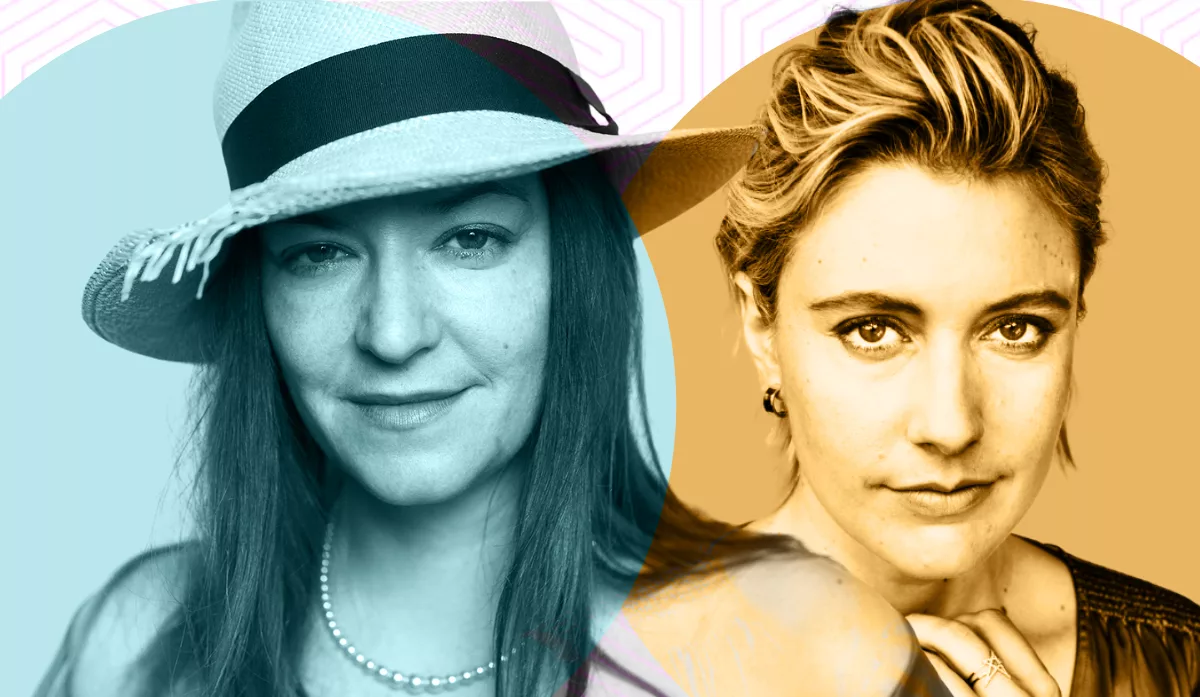

From the shimmering glamour of Hollywood’s golden age to the blockbuster era of Greta Gerwig and beyond, the industry’s attitude toward women has shifted dramatically, though not nearly fast enough. In less than a century, we’ve moved from static stereotypes to complex female characters, from being written about to writing our own stories. But the journey hasn’t been a straight line, and most women who grew up on those early depictions can still feel the echoes today.
Like many millennials, the films of my childhood taught me a very particular version of femininity. There was always a man to save the day, to provide the arc, to complete the woman who had no idea what to do without him. Don’t get me wrong, I adore a slightly cheesy rom-com. The Proposal, Pretty Woman, How to Lose a Guy in 10 Days, the whole lot of them. But looking back, I realize how much these stories shaped the expectations many of us carried into adulthood. They quietly suggested that confidence, career, identity… none of it fully counted unless a charming man validated it.
That’s not me being cynical. It’s simply the reality of scripts written from a singular point of view. As Reese Witherspoon famously said at the 2015 Glamour Awards, speaking about male-written female characters: “Inevitably I get to that part where the girl turns to the guy and she goes, ‘What do we do now?’… Do you know any woman in any crisis situation who has absolutely no idea what to do?”
For decades, the answer was: Hollywood did. And that’s the problem.
Despite women making up half the world’s population (and more than half of cinema’s ticket buyers) female writers accounted for only 17% of top-grossing films in 2023. A mere 4% increase from 1998. When one gender dominates the writers’ room, the stories inevitably tilt toward their lens. The result? A generation of women misrepresented on screen, and then misled about who they should be off it.
But something has been shifting.
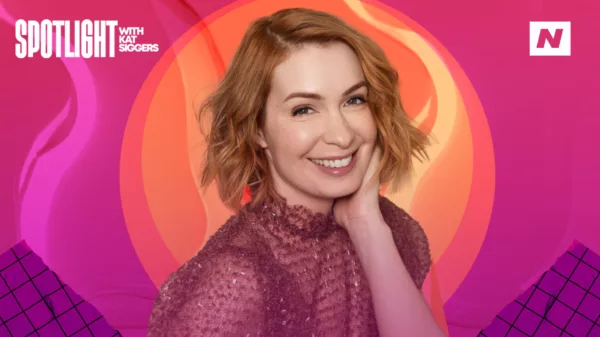
WATCH: Kat Siggers’ Latest Interview with Felicia Day
The Rise of the Female Narrative
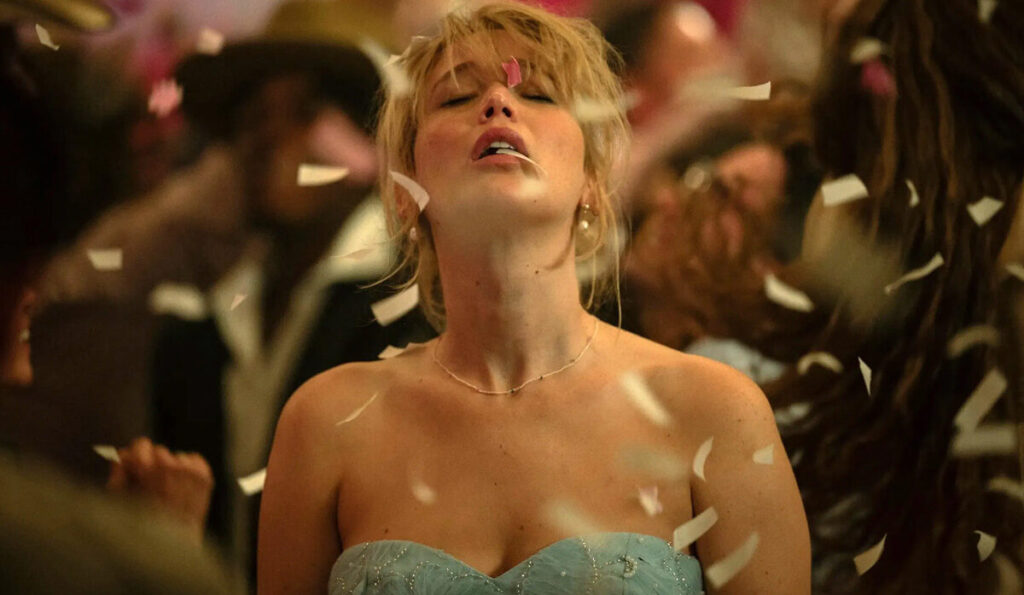
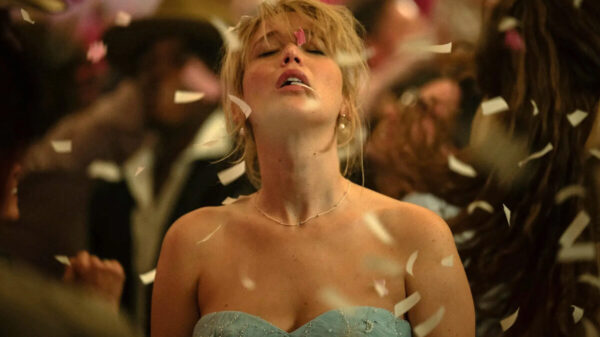
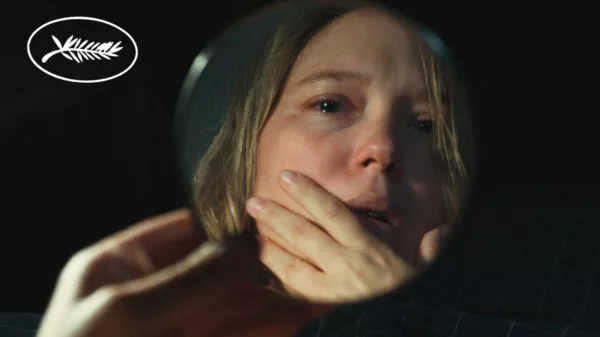
In recent years, we’ve been lucky enough to see real female stories on screen, with one of the most recent being Die My Love which was written by not one, but three female writers.
Directed by Lynne Ramsay and starring Jennifer Lawrence, the film doesn’t wrap womanhood up in pink bows or triumphant speeches. It tells the story of a woman struggling with the suffocating reality of marriage and new motherhood – loneliness, resentment, desire, identity loss, all the messy things we’re often told not to say out loud. And it doesn’t apologize for any of it.
What makes Die My Love feel so important isn’t that it shouts about feminism because it absolutely doesn’t. It simply centres around a woman’s experience without asking anyone, especially a man, to explain it, fix it, or validate it.
For decades, we’ve watched female characters reach a breaking point only to turn to the nearest man and ask, “So what do we do now?” That line Reese Witherspoon joked about has lingered in so many scripts because it reflects an assumption: that men drive the action, and women respond to it.
In Die My Love, that moment never comes.
Jennifer Lawrence’s character doesn’t look to her husband for clarity. In fact, part of the tension is that he can’t fully understand what’s happening inside her. And the film doesn’t treat that as a failure on her part. It treats it as reality. She is not a puzzle waiting to be solved. She is a person unraveling in ways that are uncomfortable, sometimes destructive, but entirely her own.
That shift matters.
Under Ramsay’s direction, the camera doesn’t judge her for feeling trapped or furious or numb. It stays with her. The anger isn’t framed as hysteria. The dissatisfaction isn’t dismissed as ingratitude. The film questions the quiet expectation that women should find total fulfilment in domestic life and smile through the cracks. It asks what happens when they don’t.
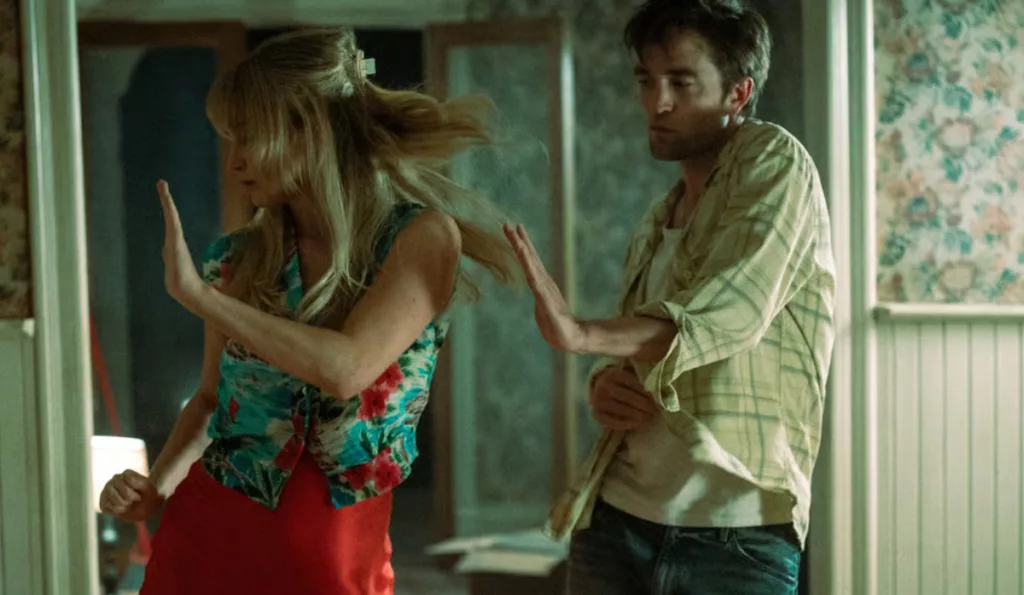
And crucially, it doesn’t suggest that a better man, a more attentive partner, or a romantic gesture would fix everything. The struggle is internal as much as external. The story belongs to her.
There’s something powerful about watching a female character who doesn’t exist to be liked, rescued, or redeemed. She doesn’t wait to be chosen. She doesn’t soften herself to make others comfortable. She doesn’t pause mid-crisis and ask, “So what do we do now?” because the film understands what so many older scripts didn’t: women already know what they feel. They don’t need permission to feel it.
Die My Love feels like part of this new chapter in cinema, one where female stories aren’t polished into palatable shapes. They’re allowed to be sharp, confusing, raw. They’re allowed to show that women can be mothers and still feel lost. Married and still feel alone. Strong and still fall apart.
And most importantly, they can stand at the centre of their own story without orbiting a man’s.
That’s not about excluding men. It’s about finally recognising that women don’t need to be completed on screen to be whole, just as for so many years men haven’t needed that from women.
Looking Back to Move Forward
Even in Hollywood’s early days, you can find flickers of female agency, often pushed through by women fighting for power behind the scenes. Marilyn Monroe’s Bus Stop (1956) is a fascinating example. Though written and crewed almost entirely by men, it was Monroe’s first film under her own production company after renegotiating her contract with 20th Century Fox. The story tackles autonomy, respect, and the discomfort of male entitlement, topics that feel startlingly modern for a 1950s release.

Of course, it still ends with them walking into the sunset, it was 1956, after all. But the mere fact that Monroe had some control over her work says something about the quiet revolution women were already trying to make, even when the industry wasn’t ready for them.
Muses: What’s Next for Women in Film
Today, the landscape is finally broadening. We have women directing superhero films, winning Oscars, spearheading billion-dollar franchises, and telling stories that are messy, honest, defiant, and deeply human. But representation behind the scenes still lags far behind what we see on screen. Until those numbers shift, our stories will always be told in someone else’s voice.
So we keep pushing. We keep writing. We keep creating. We keep stepping into rooms we weren’t always invited into. With every film made by a woman, every complex heroine written authentically, and every little girl watching someone who looks like her at the centre of a story, another door opens.
Cinema shapes us. And now, finally, we’re shaping cinema back.
Until next time, you lovely lot,
Kat x
Follow us on MSN for more content like this.