Support Us
 Sign Up





























Guillermo del Toro reanimates Mary Shelley’s iconic gothic horror novel Frankenstein to explore parent-child relationships, generational trauma, and the morals of playing God. Del Toro frequently uses horror to explore generational trauma and father-son relationships, and Frankenstein is the perfect vehicle for his balance of gore, violence, and philosophy.
The director has spent nearly two decades trying to get the source material off the ground, and he mostly sticks to Shelley’s 1818 story. Some characters are switched, some added, and some subtracted, but it still feels like a faithful version of the story. Shelley’s tale of one man’s arrogance is still full of themes that resonate with the audience; in fact, it’s a morality tale that might be the most relevant it ever has been. This may not be a word-for-word adaptation, but the writer/director understands the heart of Shelley’s writing.
The film is broken down into a prelude and two parts, which tell the story from Victor’s and the creature’s point of view. Frankenstein kicks off in the Arctic, where a Danish sea Captain (Lars Mikkelsen) is overseeing a crew trying to dig their ship out of the ice. Here they find a at deaths door Victor closely followed by his angry creation. This thread is reminiscent of the second season of The Terror, which saw a navy ship in the Arctic battle mystical powers.
The film then flashes to the scientist’s childhood. Victor Frankenstein (Oscar Isaac as an adult and Christian Convery as a child) is set on a path to generational trauma at a young age after the death of his pregnant mother (Mia Goth, almost unrecognizable under prosthetics and makeup) leaves him with his violent father (Charles Dance). This insight into Victor’s childhood may feel irrelevant to the plot of Frankenstein, but it plays an important role in exploring the larger themes at play.
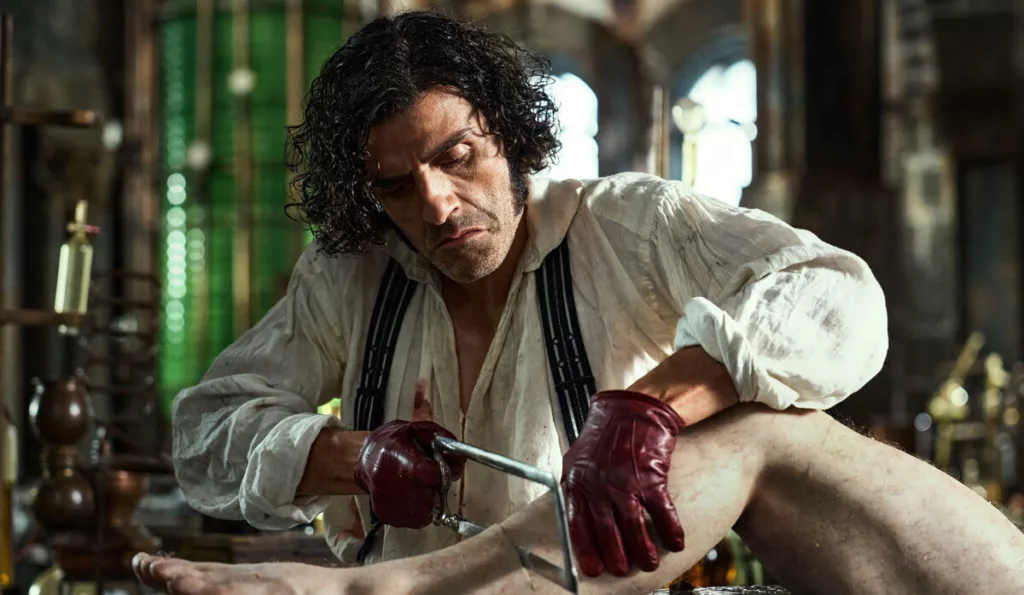
Victor grows up to be an arrogant but genius scientist who believes he can create life when running electricity through stitched-together body parts. His peers aren’t supportive of this egotistical man playing God with the corpses of prisoners and later deceased soldiers who fell on the Crimean battlefield. Instead, he finds a benefactor in arms merchant Heinrich Harlander (Christophe Waltz), who funds his exploration into creating the perfect creator from the disassembled parts of dead humans. The newly created character, Harlander, is a billionaire looking to biohack death, someone who could have been ripped from the headlines of today’s newspaper.
As with every version of Frankenstein, Victor creates a monster stitched together to form the perfect specimen. Jacob Elordi is a revelation in the role (taking over last minute from Andrew Garfield), looking more like a patchwork marble statue than a creature of horror. He looks more like the engineers from Prometheus than the clunky green designs associated with the character. Initially, he is awkward and vulnerable like a newborn child, but soon becomes confident in himself and his surroundings. Kept chained in Victor’s basement, it’s not until he escapes and makes a friend in a blind man (David Bradley in a small but hugely impactful role) that he can grow and learn.
Del Toro understands that Elordi’s character is a creation, not a villain, a sympathetic experiment abandoned by his creator when he falls beneath expectation. The film’s exploration of father-son relationships and generational trauma is genuinely gut-wrenching and will bring a tear to the eye of even the hardest cinemagoer. On the surface, this adaptation is a gory monster movie, but its soul is much more human.
Mary Shelley’s Frankenstein explores fertility and reproduction and has long been studied as an allegory for anxieties around pregnancy and motherhood. Del Toro’s Frankenstein is very clearly a masculine version of the story, amping up the male viewpoint of the tale. This is less a story about the fear of creation and more about the fear of a man turning into his father.
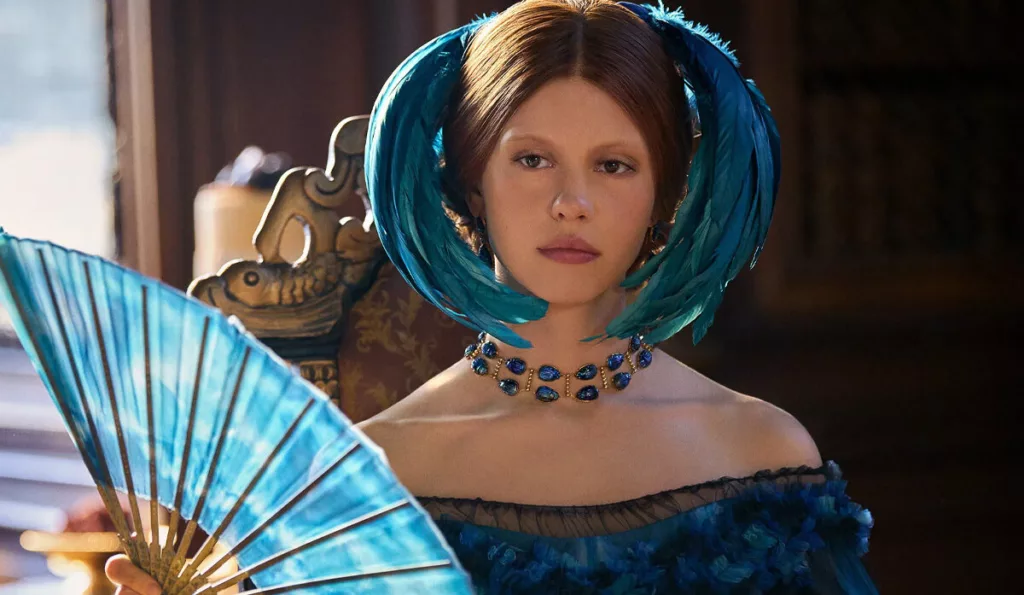
The women of Frankenstein are the part most toyed with by del Toro’s writing. Elizabeth (also played by Mia Goth) is no longer betrothed to Victor, she is engaged to marry Victor’s younger brother William (Felix Kammerer). Victor is instantly captivated by Elizabeth with her curious mind and intellectual conversation. Switching Elizabeth to being something Victor wants but cannot have only highlights the man’s egotistical nature. The film fails to give Victor and Elizabeth’s relationship time to grow, especially as it has been contextualized in this new adaptation. It’s one of the many times del Toro presumes the audience knows the source material enough to not need to stop the story to explore the where, when, and whys.
Unlike the book, Elizabeth is not appalled by the creation; she is fascinated by him and his capabilities. While the women of Frankenstein are sidelined, Elizabeth is allowed to flourish with her sharp mind and strong temperament. She’s not minimised as the shrieking scream queen; she is someone who does not just match Victor but outsmarts him. Goth is beautiful on screen, all doe-eyed until she needs to show her teeth. If Frankenstein is using her in a dual role to symbolize Oscar’s Freudian relationship with his mother, it’s hidden deep in the subtext.
Elordi puts more heart and layers into his creature than the script asks of him. He is physically domineering at 1.96 m, towering over his father, but he also emotionally dominates the narrative. The film would have likely fallen into style over substance without Elordi’s delicate and soulful portrayal as a child longing for his father’s affection. Oscar Isaac is likable as the mad scientist, underplaying the role in comparison with some of his more eccentric co-stars. Isaac needed Elordi’s performance to land the emotional weight of the film.
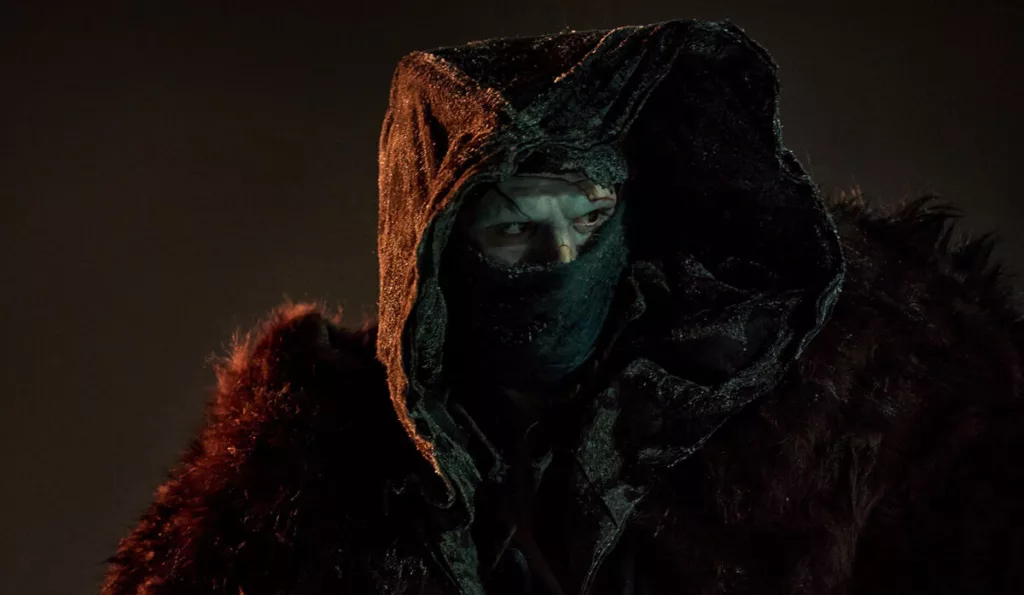
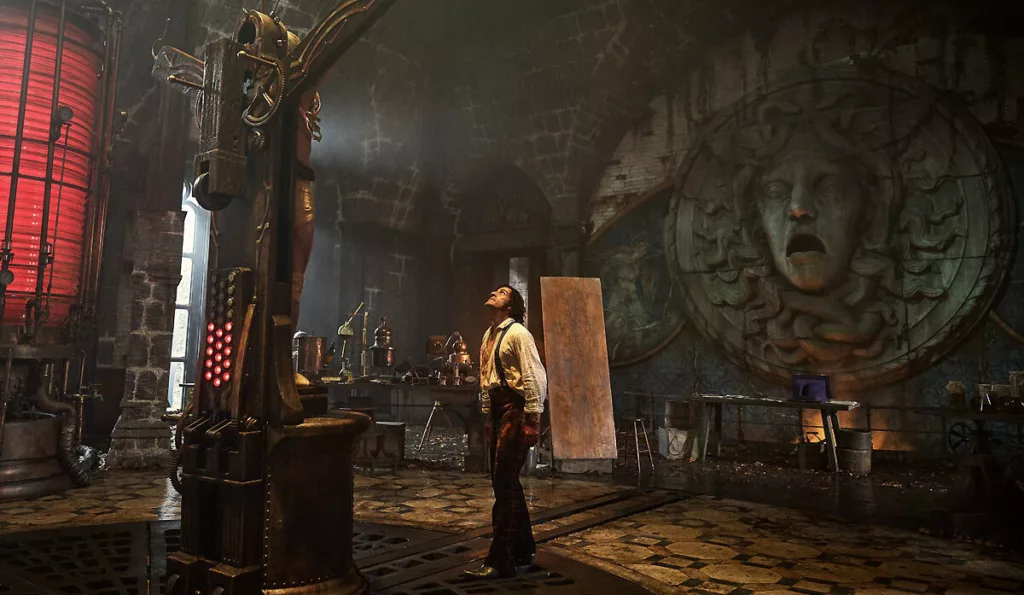
Frankenstein is jaw-droppingly beautiful, which is even more devastating to think that this film will mostly be watched on Netflix, as it has a limited release in cinemas by the streamer. This film, with the gothic-inspired sets, lavish costumes by Kate Hawley, and Gothic architecture, deserves to be seen on a big screen. Almost all the sets were physical constructions, including the Danish ship, and this attention to detail is clear on-screen. The detailed sets are all combined with an uncanny sheen, like in Poor Things, which gives the world a dream-like feel. All this production, combined with a sumptuous score by Alexandre Desplat, creates an emotional experience.
The final act in this slightly bloated 2 hours and 30 minutes adaptation indulges in violence. Character development and sympathies are replaced with punching wolves and killing soldiers. Some of the text’s subtitles are thrown aside to favour more exaggerated violence that minimises emotions but enhances the cinematic experience.
Frankenstein is a film seamlessly stitched together with different genres, subgenres, and themes. The opening part is full of gross body horror, showcasing Victor’s experiments and gravedigging in its full bloody gory. Many of these scenes are stomach-churningly realistic, the camera lingering over nervous systems and scoped out brains.
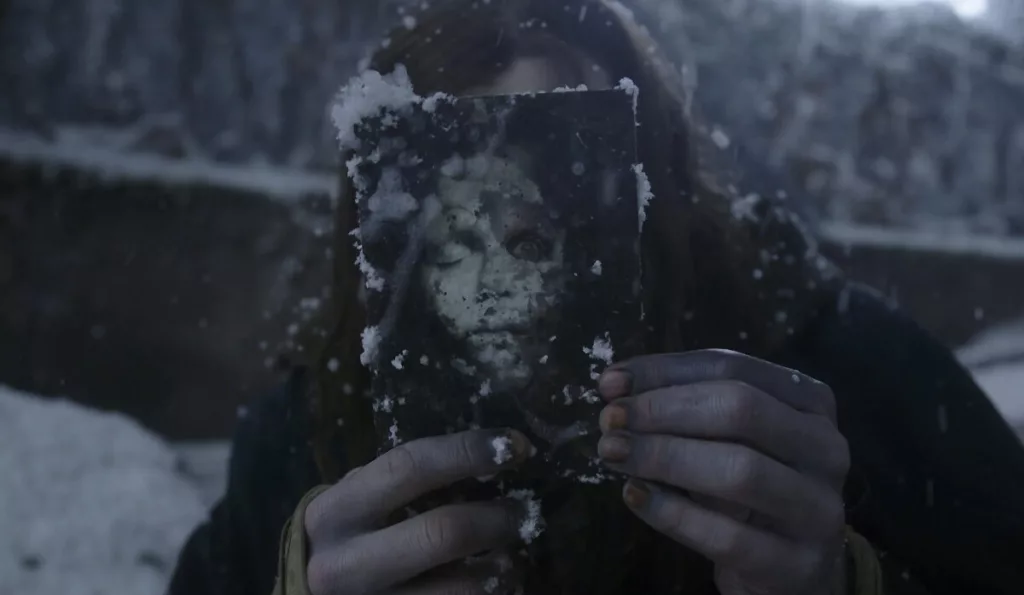
Del Toro’s reimaging is probably the goriest adaptation of Frankenstein on-screen. The gross violence is paired with sumptuous gothic romanticism to offer a beautifully horrific visual. Every scene is dripping with symbolism and layers of meaning; you’ll want to rewind scenes to take it all in. Del Toro pulls out all his best gothic gore tricks in Frankenstein without ever losing the heart and soul of the fairytale.
Grade: B
Follow us on MSN for more content like this.
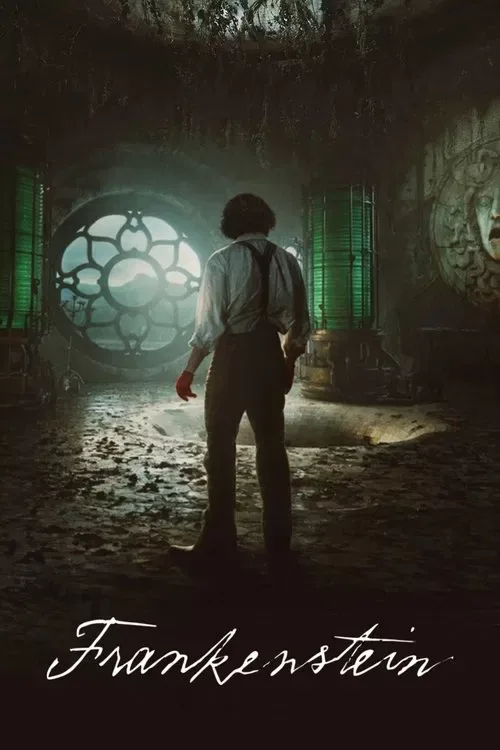
Frankenstein
Dr. Victor Frankenstein, a brilliant but egotistical scientist, brings a creature to life in a monstrous experiment that ultimately leads to the undoing of both the creator and his tragic creation.
Release Date: October 17, 2025
Director: Guillermo del Toro
Cast: Oscar Isaac , Jacob Elordi , Mia Goth