Support Us
 Sign Up










































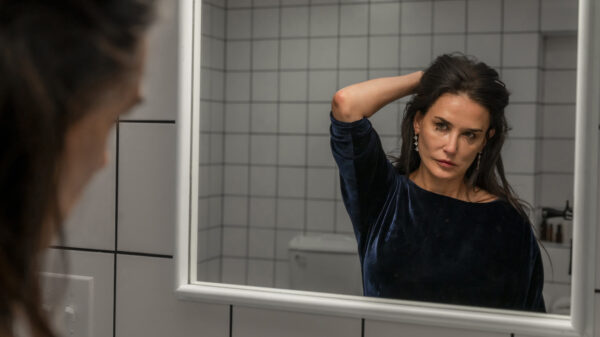
Imagine looking in the mirror and almost always finding something wrong—your makeup looks off, your eyebrows won’t cooperate, your ears feel like they stick out, or your skin texture seems visible from space. While these concerns may seem trivial, they can have a profound impact on one’s mind. These themes are powerfully explored in Coralie Fargeat’s Golden Globe-nominated film, The Substance. Starring Demi Moore and Margaret Qualley, the film left a much deeper impression on me than I anticipated. While it leans heavily on gore and horror, its underlying narrative about how women are treated as they age and how we view our own bodies lingered long after the credits rolled. Thus, I was overjoyed when Demi Moore won the Golden Globe for Best Performance by a Female Actor in a Motion Picture – Musical or Comedy.

Before we dive into The Substance a bit more, it’s important to highlight that 2024 was undeniably a banner year for horror. Longlegs, Smile 2, Nosferatu, The Substance—the list goes on. While Longlegs left me reflecting on its villain for weeks, it’s the raw, unsettling journey of Elisabeth Sparkle in The Substance that spoke to me the most. I spent much of the last year urging everyone I knew to watch it, but I was painfully aware of how often awards boards overlook the horror genre. I had little hope for The Substance to win at the Golden Globes. And even though it didn’t win Best Motion Picture – Musical or Comedy or Best Director, you can imagine my surprise and delight when Demi Moore was announced as the winner in her category. As she walked to the stage, I couldn’t help but think about why this win felt so monumental—not just for Moore, but for the film and its audience as well.
The Substance tells the story of Elisabeth (Moore), a Hollywood actress-turned-fitness guru who, on her 50th birthday, is fired from her television series for being “too old” and subsequently gets into a devastating car accident. During her visit to the ER, the woman is handed a mysterious USB device that showcases an interesting experiment: it will allow Elisabeth to split into two versions of herself: her current self and a younger version, Sue (played by Margaret Qualley). The catch? Sue can only exist for seven days at a time, after which Elisabeth must revert to her older self for another seven days to recover. Sue also requires a daily injection of a stabilizing serum to function. The rules must be followed or else there will be consequences.

Follow us on MSN for more content like this.
Elisabeth and Sue share one consciousness, meaning any harm to one affects the other. As both versions navigate this strange duality, tension arises. Elisabeth begins to resent Sue’s youthful vitality, while Sue disrespects her older version and downplays the accomplishments Elisabeth has achieved throughout the years. “Remember, you are one,” becomes a haunting refrain throughout the movie, underscoring the harm we do to ourselves when we disrespect or bully our bodies. Fargeat poignantly critiques how societal pressures, especially in Hollywood, distort our self-image and perpetuate dissatisfaction with any deviation from an unrealistic ideal from social media platforms or television.
One scene, in particular, resonated deeply with me as someone who struggles with body dysmorphia. Watching Elisabeth frantically change outfits before her date and apply makeup in increasingly aggressive attempts to perfect her appearance was both terrifying and heartbreakingly familiar. I felt her pain, her hopelessness—the sense of never being enough. It was one of the most visceral and relatable portrayals of body image struggles I’ve ever seen. That’s why Demi Moore’s win felt so significant. The film’s depiction of this universal yet deeply personal struggle not only validated those feelings but also invited reflection on how we treat ourselves and that perhaps we can work on lifting ourselves up instead.
Margaret Qualley & Demi Moore Golden Globe Awards

As Demi Moore stood on stage to accept her award, she proved the film’s point in a bittersweet way—this was her first award, despite decades of iconic performances. I grew up watching her, from her gritty determination in G.I. Jane to her unforgettable roles in Charlie’s Angels, Ghost, Now and Then, and more. Her recognition of The Substance felt like a wonderful acknowledgment of both her talent and the importance of this film—a gory, emotional, thought-provoking exploration of body horror and self-acceptance.
The Substance is now streaming on Mubi and is available for rent on other streaming platforms.
Follow us on MSN for more content like this.