Support Us
 Sign Up






































Blue Moon is a meta exploration of the lyricist Lorenz Hart and a love letter to old Broadway. Set six months before Lorenz Hart died in 1943, aged just 48, Blue Moon spends an evening in Hart’s company during the afterparty of the opening night of Oklahoma!
Richard Linklater’s intimate portrait of Hart feels like spending the evening with the man himself. Almost exclusively set in a single location, Lorenz parks himself up at the bar in Sardi’s (an iconic midtown New York restaurant) and tries to bluff his way through the evening. Blue Moon isn’t just an exploration of one man, but a look at the changes happening to the industry and the city at the time.
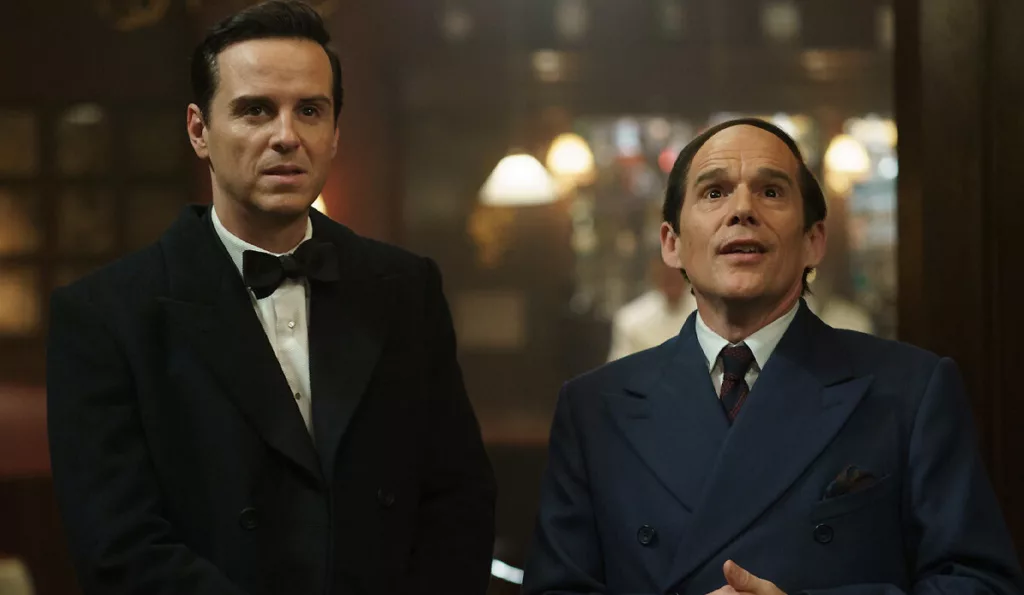
Lorenz Hart’s attendance at the opening night of Oklahoma! is like attending the wedding of a beloved ex. Composer Richard Rodgers (Andrew Scott) had broken up his professional relationship with Hart some years prior. He would go on to work with lyricist Oscar Hammerstein (Simon Delaney) instead, choosing to make Oklahoma! together, which would be far bigger than anything Hart and Rodgers ever made. This is even sadder when you consider Rodgers’ professional relationship with Hart has been overshadowed in pop culture history by his work with Hammerstein (which includes The Sound of Music and South Pacific).
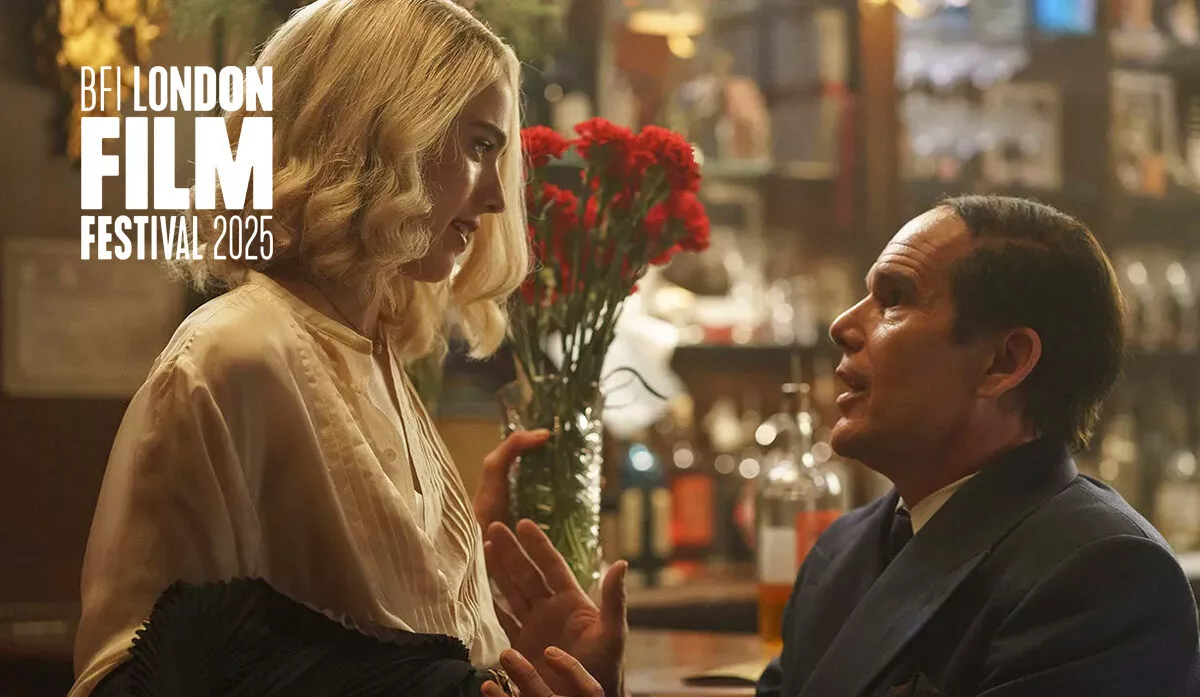
Hart arrives at Sardi’s before anyone else and immediately parks at the bar, although he demands that no one give him alcohol. Initially, he is alone with Eddie the bartender (Bobby Cannavale) and piano player (Jonah Lees). The film makes a Casablanca reference before the audience can be aware of the similarities between the two. This is the first of many self-referential moments in Blue Moon that somehow avoid grating. This film wears its knowing, Hollywood-adoring script as a badge of honor with absolutely no cynicism.
Harts lurks at the afterparty as a ghost, only interacting with a handful of characters throughout. Surrounded by portraits of industry icons, he senses that public taste in musical theatre is shifting amid the wars, and he doesn’t like where it’s going.

Eddie acts like the audience, asking the questions and receiving the answers. Hart updates the barman on his feelings towards Rodgers, his waning career, and the stage of the musical theatre industry. Through snappy dialogue between the two men and the ambitious piano player, audiences are quickly caught up with the state of play. It’s a masterclass in how to pull off tell, not show, helped by Cannavale’s likability and Hawke’s masterclass performance.
He knows that he and Rodgers will never have the relationship they once had, but he still mourns the could-have-beens. This sadness manifests itself in making constant swipes at the cheesiness of Oklahoma! It’s hard to dislike Hart when he is constantly delivering one-liners this cutting and funny.
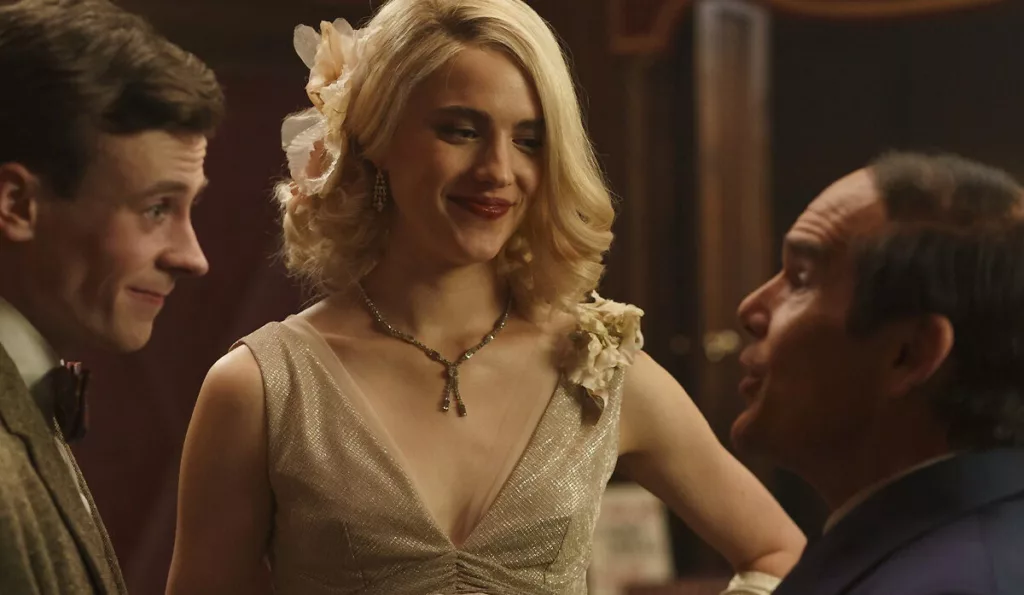
At least, Hart has one distraction from his career woes. He has found romance with college student Elizabeth Weiland (Margaret Qualley). Despite being two decades younger, Hart has found himself a new object of his obsession. As he speaks about her to Eddie, often relying on crude jokes and double entendres, it becomes clear the man needs to become obsessed with one thing, and it’s usually something he cannot have. Unlike other film adaptations, Hart is not straight-washed; he is self-described as “omnisexual” because you must know all types of romance to write about it. Ultimately, he is just a lonely man looking for a connection, and Elizabeth has yet to be turned off his self-loathing, melancholia, and alcoholism.

Ethan Hawke gives a career-best performance as Lorenz Hart. He totally disappears into the role, almost unrecognizable with the comb-over and dark contacts. One second, he’s telling people he is the most talented man in the world; moments later, he is visibly crumbling under the weight of his existence. Hawke’s performance keeps Hart a likable raconteur despite his seediness and self-deprecation.
The film focuses almost exclusively on Hawke for its 100-minute runtime, and there is not a second that he is not totally in the role. He talks a mile an hour, flitting from subject to subject, all with a waft of a hand and a pithy quote. After 25 years working together, Linklater knows how to get the best from Hawke. You’ll leave Blue Moon feeling like you have truly gotten to know the best and worst of Lorenz Hart, and you may even see some of yourself in him.
Andrew Scott is a likable supporting player in his role as Rodgers. Lorenz spends the first act setting Rodgers up to be the villain, but when he arrives, he gives his former partner more grace than many others would. He is gentle with the lyricist, noting that he would happily work with him again if it were not for his alcohol abuse. Scott’s natural charm means he can effectively deliver the essence of Rodgers with minimal screen time.
Screenwriter Robert Kaplow pays tribute to the film’s subject by presenting Blue Moon like a play. With just three locations and a small cast of speaking characters, this movie feels ripe for a stage adaptation. The writing even acknowledges this setup, with Eddie wondering if people were just extras in our lives.
The film is not above cheesy Midnight In Paris moments. E.B. White, George Roy Hill, and an adolescent Stephen Sondheim all appear like little easter eggs. Blue Moon is not exclusively for theatre fans, but it will certainly be enjoyed by those with a fascination for classic Broadway.
Blue Moon is proudly subdued, which may not appeal to all audiences. Fans of theatre will appreciate the amount of care and detail put into the writing and performances. It’s not just a character study of Lorenz Hart but a sensitive portrait of a tortured man and the pain of collaborations in art.
Blue Moon is a charming portrait of a troubled genius and a fitting tribute to a great man who has not been given the flowers he deserved. As subdued and quiet as the cinematography is, the performances and tight writing make this film worthy of the big screen.
Grade: B
Follow us on MSN for more content like this.
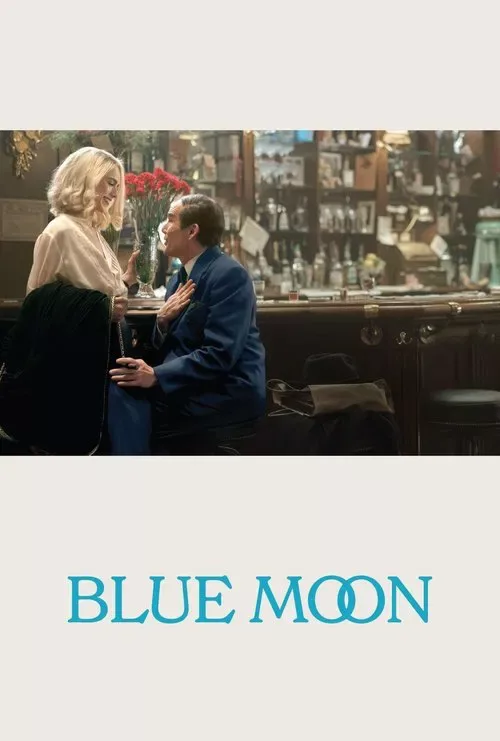
Blue Moon
On the evening of March 31, 1943, legendary lyricist Lorenz Hart confronts his shattered self-confidence in Sardi’s bar as his former collaborator Richard Rodgers celebrates the opening night of his ground-breaking hit musical “Oklahoma!”.
Release Date: October 17, 2025
Director: Richard Linklater
Cast: Ethan Hawke , Margaret Qualley , Bobby Cannavale